 The Yoga Register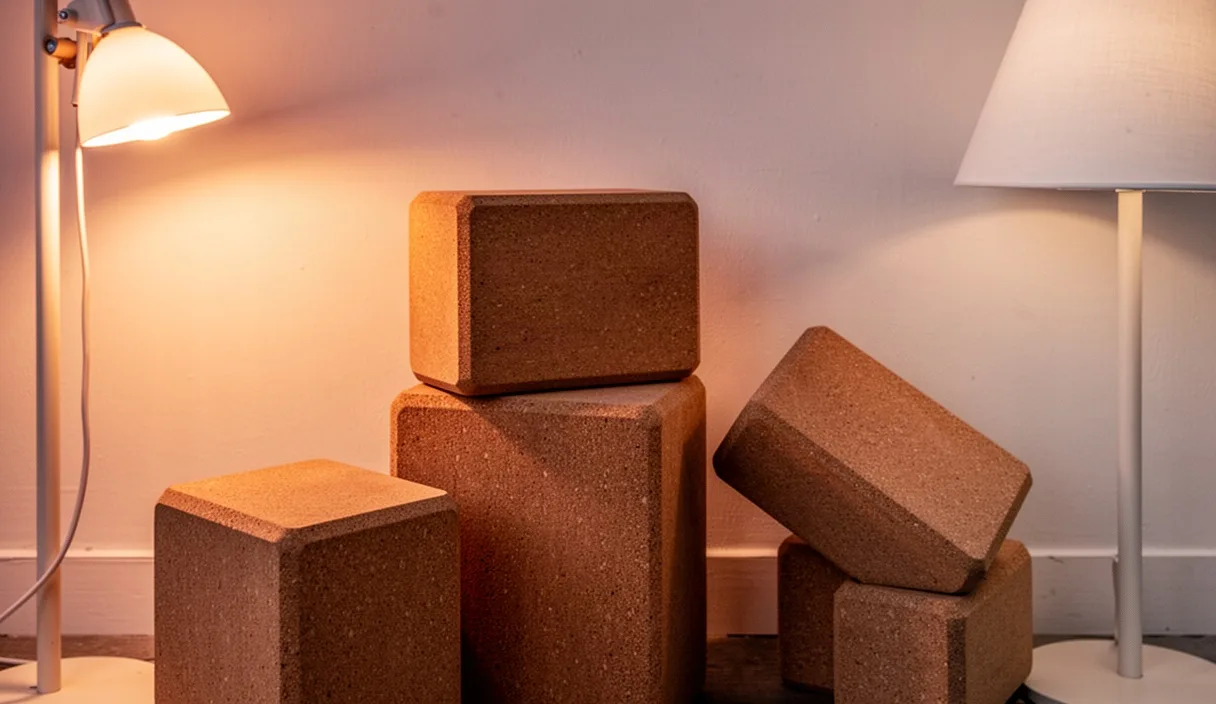

Hamstring restriction is one of the most frequent structural limitations encountered in postural yoga. The hamstring complex comprises three distinct muscles: the biceps femoris, semitendinosus, and semimembranosus. Because these muscles originate at the ischial tuberosity of the pelvis and insert across the knee joint onto the tibia and fibula, their baseline resting length directly governs both pelvic positioning and spinal mechanics. When hamstring flexibility is limited, forward flexion of the hips draws the pelvis into a compensatory posterior tilt, forcing the lumbar spine to flex beyond its neutral capacity to bring the hands toward the floor.
Yoga blocks serve as mechanical extensions of the floor to address this structural limitation. Rather than viewing a prop as a temporary crutch, precise block placement functions as an intentional modification of leverage. By elevating the ground reaction point, blocks reduce the angular demand on the acetabulofemoral joints. This elevation preserves the neutral lordotic curve of the lumbar spine, decreases stress on the posterior intervertebral discs, and distributes muscular tension evenly through the posterior kinetic chain. Standard rectangular blocks typically measure 4 by 6 by 9 inches (approximately 10 by 15 by 23 centimeters), offering three distinct working heights depending on which face contacts the floor.
Torso Angles and Hip Tension: The Geometry of Elevation
When an individual with tight hamstrings attempts a standing forward bend with straight knees, the pelvis typically arrests its anterior rotation between 45 and 65 degrees of forward flexion. Normal, unhindered hip flexion in a standing forward bend requires approximately 90 degrees of anterior pelvic tilt relative to the femurs. If the pelvis stops rotating at 60 degrees, the remaining distance between the torso and the ground must be absorbed by the soft tissues of the back, primarily through excessive flexion of the lumbar and lower thoracic vertebrae.
This compensatory movement pattern places high tensile loads on the supraspinous ligaments and the active vitality spinae musculotendinous junctions. Raising the floor using blocks alters this closed kinematic chain. If the floor is raised by 9 inches using two blocks on their highest setting, the required torso travel distance decreases substantially. A reduction in required forward travel translates to a 15-to-25-degree reduction in necessary hip flexion, allowing the sacrum to remain aligned with the lumbar spine without rounding the lower back.
The relationship between block height and pelvic inclination can be tracked through specific skeletal landmarks:
- Ischial tuberosities: With adequate block elevation, the sitting bones track superiorly and posteriorly, indicating that the pelvis is tilting anteriorly over the femoral heads.
- Anterior superior iliac spines (ASIS): In an elevated setup, the ASIS points move down toward the tops of the thighs rather than rotating upward toward the lower ribs.
- Lumbosacral junction: Preserving a slight, neutral inward lordosis prevents the posterior protrusion of the L4-L5 and L5-S1 disc spaces under mechanical load.
When the pelvis is supported at an angle that matches current tissue capacity, the hamstring muscles undergo active lengthening under tolerable eccentric tension rather than protective spasm. If a practitioner forces the hands to the floor despite severe hamstring tightness, the stretch reflex triggers involuntary contraction, which defeats the intended mobility goal of the posture.
Trikonasana: Hand to Floor vs Hand to High-Block Metrics
In Utthita Trikonasana (Extended Triangle Pose), the lead leg combines hip flexion, external rotation, and abduction. In an unassisted variation where the hand attempts to reach the mat or the ankle, the restricted semimembranosus and biceps femoris muscles anchor the hemipelvis in posterior rotation. Consequently, the practitioner rounds the spine laterally and drops the top shoulder downward, collapsing the ribcage to close the physical distance to the floor.
Placing a block at its high orientation (9 inches / 23 centimeters) directly behind the lateral malleolus of the lead ankle completely reorganizes the structural vectors. By establishing an early stable contact point, the distance from the lead shoulder to the floor remains extended. The lateral aspect of the torso on the lead-leg side retains linear length parallel to the floor, matching the length of the top flank.
| Mechanical Metric | Hand to Mat (Tight Hamstrings) | Hand to High Block (23 cm) |
|---|---|---|
| Lead Hip Flexion Angle | Approaching 85 to 95 degrees (forced) | Maintained between 60 and 70 degrees |
| Front-Flank Lateral Compression | High: severe concave spinal c-curve | Low: spine remains axially extended |
| Rear Foot Grounding Force | Reduced: weight shifts forward | High: balanced weight in rear heel outer edge |
| Lead Hamstring Vector | Asymmetrical shear on biceps femoris | Symmetrical line of tension across muscle belly |
To implement this setup correctly during practice, follow this specific entry protocol:
- Set a wide stance of approximately 3.5 to 4 feet (105 to 120 centimeters), aligning the front heel with the arch of the back foot.
- Place the block vertically on its 4-by-6-inch base, positioning it 2 inches behind the outer edge of the front ankle.
- Hinge at the front hip crease while pressing firmly into the outer rim of the rear heel, keeping both sides of the waist long.
- Lower the front hand straight down onto the top surface of the block, pressing the palm flat without leaning the torso forward past the line of the front shin.
- Engage the front quadriceps to stabilize the knee, preventing hyperextension while keeping the weight distributed between the hand and both feet.
Parsvottanasana Setup to Prevent Unilateral Sacroiliac Shear
Parsvottanasana (Intense Side Stretch Pose) creates a demanding unilateral loading pattern. Because the legs are staggered on separate parallel tracks with both feet turned forward, the front hamstring is placed on maximal stretch while the pelvis attempts to maintain a neutral, square orientation relative to the front edge of the mat. If the front hamstring resists lengthening, it anchors the anterior superior iliac spine of the forward leg, pulling that side of the pelvis forward and down or dragging the sitting bone backward, which creates a rotational torque across the sacroiliac (SI) joint.
Sacroiliac shear occurs when one ilium rotates posteriorly relative to the sacrum while the opposite ilium rotates anteriorly under weight-bearing loads. If the practitioner reaches for the floor while fighting hamstring resistance, the unequal strain on the sacrotuberous and sacrospinous ligaments can produce localized joint inflammation. Using two blocks, one on each side of the front foot, prevents this destructive rotational force.
Position two blocks at equal height (typically the medium 6-inch or high 9-inch setting) directly under the shoulders, roughly 6 inches to the left and right of the lead foot. This bilateral placement establishes a stable, four-point base of support. The practitioner rests their hands on the blocks with wrists positioned directly beneath the shoulders, bearing a fraction of the upper body mass through the arms.
With upper body weight distributed through the blocks, the practitioner can actively draw the front-leg hip crease back while rolling the rear-leg hip forward. This restores transverse pelvic symmetry. Once the pelvis is level, the spine can elongate forward along the sagittal plane, allowing the front hamstring to stretch uniformly from its origin at the ischium to its insertion below the knee without producing asymmetric shear across the sacral base.
Weight Distribution and Block Stability Under Load
The stability of a yoga block depends on the dimensions of its contact footprint and the material density of the prop. When loaded with body weight, a block positioned on its narrowest face (the 4-by-6-inch base, standing 9 inches tall) possesses a high center of gravity. It is sensitive to lateral shear forces. If a practitioner pushes against the top edge at an angle rather than pressing straight down, the block can tip, causing sudden loss of support and rapid muscular strain.
Block materials significantly influence load handling:
- Cork blocks: Possess high density (roughly 0.5 grams per cubic centimeter) and structural rigidity. They offer high traction against mats and minimal give under heavy loads, making them the standard choice for standing postures and balance support.
- High-density EVA foam: Typically weighs less than half the mass of cork. While comfortable for seated work, foam blocks can compress or deform on their edges when loaded with substantial body weight, which introduces minor instability during forward hinges.
- Hardwood blocks: Extremely stable with zero compressive yield, but can slip on smooth surfaces if sweat accumulates on the mat.
To maintain mechanical stability under load, the vector of applied force must remain perpendicular to the floor. The center of pressure from the hand should align within the middle third of the block top surface. If the wrists are extended and fingers drape loosely over the sides, downward force pushes through the carpal tunnel, which may lead to wrist strain. Instead, the practitioner should place the base of the palm firmly on the block surface with the fingers spread wide, actively engaging the forearm flexors and the triceps to direct load strictly straight down into the floor.
Standard Placement Reference Table Categorized by Limb Length
Individual skeletal proportions dictate where and how high a block should be positioned. An individual with long legs and a short torso faces a different mechanical challenge than someone with short legs and a long torso, even if both exhibit identical hamstring tightness. The following reference table categorizes recommended block orientations based on limb proportions and active hamstring flexibility, measured by an active straight leg raise (ASLR) test.
| Body Proportion & ASLR Range | Standing Forward Fold (Uttanasana) | Triangle Pose (Trikonasana) | Pyramid Pose (Parsvottanasana) | Primary Alignment Checkpoint |
|---|---|---|---|---|
| Long legs, short torso (ASLR under 60 deg) | Two blocks, high setting (23 cm), directly under shoulders | One block, high setting (23 cm), outside back edge of foot | Two blocks, high setting (23 cm), forward of the front toes | Maintain active anterior pelvic tilt; prevent lumbar kyphosis |
| Long legs, short torso (ASLR 60 to 80 deg) | Two blocks, medium setting (15 cm), under shoulders | One block, medium setting (15 cm), behind lateral ankle | Two blocks, medium setting (15 cm), flanking mid-foot | Ensure equal weight through heels; unweight toes slightly |
| Balanced limbs (ASLR under 60 deg) | Two blocks, high setting (23 cm), level with toes | One block, high setting (23 cm), resting against outer shin | Two blocks, high setting (23 cm), flanking front ankle | Extend sternum away from navel; keep ribcage expanded |
| Balanced limbs (ASLR 60 to 80 deg) | Two blocks, medium setting (15 cm), level with toes | One block, medium or low setting (10 to 15 cm) | Two blocks, medium setting (15 cm), flanking toes | Square both iliac crests to front edge of mat |
| Short legs, long torso (ASLR under 60 deg) | Two blocks, medium setting (15 cm), 4 inches ahead of feet | One block, high setting (23 cm), directly behind ankle | Two blocks, high setting (23 cm), flanking front ankle | Prevent thoracic rounding; retract shoulder blades |
| Short legs, long torso (ASLR 60 to 80 deg) | Two blocks, low setting (10 cm), flanking feet | One block, low setting (10 cm), behind lateral ankle | Two blocks, low setting (10 cm), flanking mid-foot | Hinge purely from hip sockets without lumbar flexion |
Common Mistakes
Improper utilization of blocks can introduce new alignment faults even as it alleviates hamstring tension. Correcting these mechanical errors preserves the integrity of the postures.
- Leaning forward into the props: In standing forward folds, practitioners often place the blocks too far in front of the feet, shifting their center of mass anteriorly over the toes. This causes the pelvis to drift behind the heels, turning a vertical hinge into an angled lean that reduces useful tension on the hamstrings. Keep blocks directly beneath the shoulder joints.
- Knee hyperextension under load: When blocks provide a firm hand rest, practitioners often force their front knee backward into terminal extension, wedging the joint capsule tight. This transfers load off the hamstring muscle belly and onto the posterior cruciate ligament and popliteal structures. Maintain a micro-bend in the knee, engaging the quadriceps actively to safeguard the joint.
- Collapsing the shoulder girdle: Resting heavy torso weight on blocks often causes practitioners to slump between the scapulae, jamming the humerus into the subacromial space. Press the hands downward into the blocks to activate the serratus anterior, maintaining space between the ears and shoulders.
- Insecure block orientation: Setting a lightweight foam block on its narrowest, tallest orientation during dynamic transitions invites tipping. Use a lower, more stable block face until balance and joint position are fully established.
Practical Next Steps and Implementation
To apply these placement principles effectively, begin by assessing passive and active hip flexion capacity off the mat. Lie supine on the floor, keep one leg flat against the mat, and lift the other leg straight up without bending the knee. If the leg cannot reach a 70-degree vertical angle without the opposite hip lifting or the knee bending, standing forward bends should always incorporate high or medium block placements.
Integrate props consistently rather than periodically. Use two dense cork blocks as standard setup equipment on the mat, placing them at the top corners before beginning movement sequences. Transition slowly into asymmetric postures such as Parsvottanasana and Trikonasana, adjusting the placement of the blocks before bearing weight through the upper extremities.
Persistent or sharp pain localized precisely at the ischial tuberosity (the sitting bone), or pain radiating down the posterior thigh past the knee joint, is not standard muscular tightness. These symptoms may indicate proximal hamstring tendinopathy or sciatic nerve irritation. If sharp, burning, or tingling sensations occur during forward bends, suspend deep hip flexion immediately and consult a physical therapist or medical professional for a comprehensive musculoskeletal evaluation.