 The Yoga Register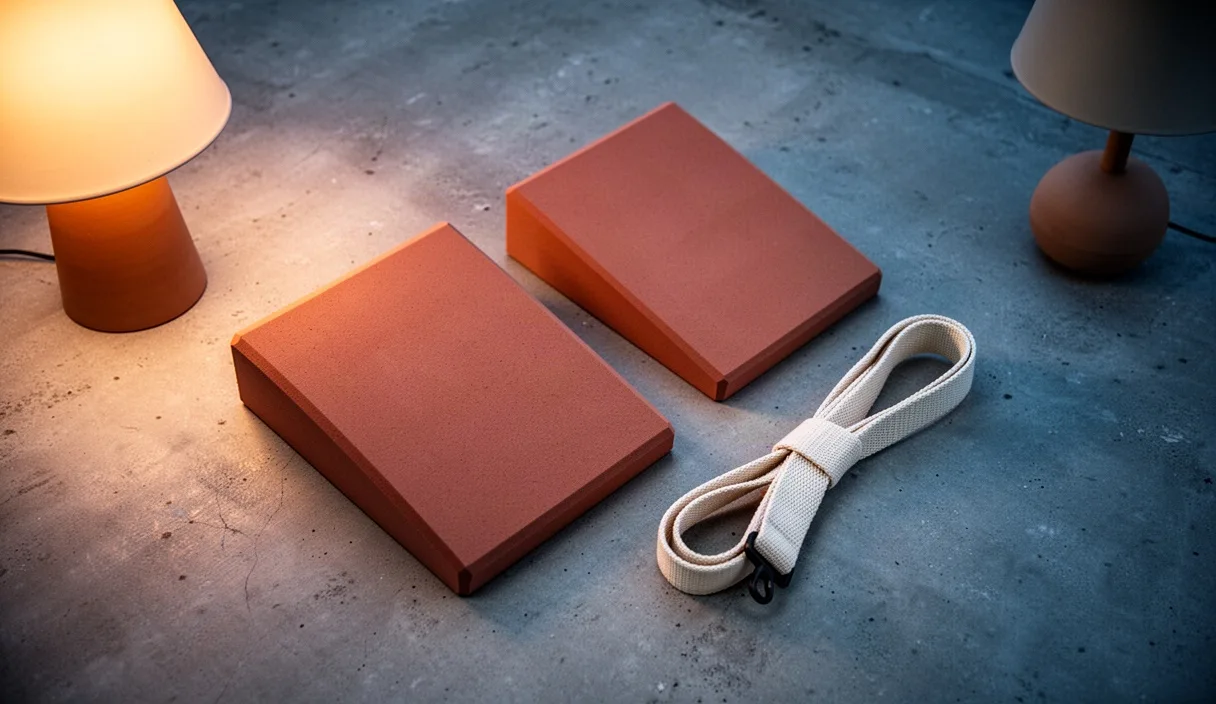

In modern Vinyasa yoga, the wrist joint absorbs repetitive, closed-chain body weight at extreme margins of dorsal extension. The standard transition from Phalakasana (Plank Pose) through Chaturanga Dandasana to Urdhva Mukha Svanasana (Upward-Facing Dog) requires an extension angle between 85 and 95 degrees at the radiocarpal articulation. When these movements repeat across dozens of cycles without sufficient rest periods, the dorsal structures of the wrist undergo mechanical compression, while the palmar soft tissues experience sustained tensile load. Over the duration of an hour-long class, this cumulative load frequently results in dorsal wrist impingement, tenosynovitis of the extensor tendons, or aggravated strain within the triangular fibrocartilage complex (TFCC).
Most instructional cues focus on hand positioning, such as spreading the fingers or pressing through the base of the index finger. While distal load distribution reduces pressure on the median nerve, it does not lower the total compressive forces transmitted through the forearm bones when the torso is horizontal. Joint preservation therefore depends primarily on class architecture: how an instructor spaces weight-bearing intervals, incorporates closed-fist or forearm options, and alternates upper-limb loading with standing postures. Structuring a class to protect the wrists requires moving beyond spontaneous sequencing to apply deliberate mechanical parameters.
Cumulative Weight-Bearing Tolerances in the Wrist Joint
The wrist is an articulation composed of eight carpal bones interacting with the distal radius and an articular disc at the ulna. In open-chain movements, such as carrying an object or swinging the arms, the joint displays wide mobility without carrying ground reaction forces. In closed-chain postures, where the hand remains anchored to the mat, the radius bears approximately 80 percent of the axial load, while the TFCC and ulna bear the remaining 20 percent. As the angle of wrist extension approaches 90 degrees, the space within the dorsal carpal tunnel narrows, increasing intracarpal pressure significantly.
A typical sixty-minute dynamic Vinyasa class contains between 22 and 38 transitions that load the hands directly against gravity. In an average sequence, a practitioner holding Plank Pose for 20 seconds, lowering through Chaturanga over 4 seconds, and pressing through Upward-Facing Dog for 8 seconds subjects the wrists to more than 30 seconds of high-load extension in a single pass. If an instructor sequences 30 repetitions of this cycle, the wrists experience 15 cumulative minutes of near-maximal extension under 45 to 65 percent of total body mass. This duration exceeds the functional tolerance of non-conditioned connective tissues, particularly when transitions happen quickly and muscle fatigue impairs active stabilization by the flexor carpi radialis and ulnaris.
Furthermore, axial loading creates localized friction against the flexor retinaculum. If a student presents with limited dorsiflexion, anatomical variance in the radial inclination, or early stages of tendinopathy, repeated compression triggers inflammatory responses within the synovial sheaths. Instructors must treat the wrist not as an indestructible pillar, but as a small joint complex designed for dexterity that requires regulated loading intervals. When deep pain or sudden joint clicking arises, the student should be advised to step away from closed-chain loading and consult a licensed physical therapist or orthopedist for clinical assessment.
Biomechanical Relief Derived from Fist and Forearm Alternatives
To reduce carpal compression without interrupting the metabolic rhythm of a class, instructors can integrate fist and forearm variations directly into foundational postures. Placing the hand in a closed fist aligns the metacarpal bones directly over the radius and ulna. This position shifts the wrist angle from 90 degrees of extension to neutral zero-degree alignment, eliminating dorsal impingement and unloading the carpal tunnel entirely. For students with existing wrist sensitivity, the neutral fist posture distributes axial forces linearly along the long axes of the radius and ulna, which are structurally suited to sustain compression.
Forearm modifications remove the hand and wrist complex from the weight-bearing chain altogether. Shifting from Phalakasana to a Forearm Plank or from Adho Mukha Svanasana (Downward-Facing Dog) to Dolphin Pose transfers ground reaction forces to the olecranon process of the ulna and the muscular bed of the anterior forearm. This shift recruits the serratus anterior and latissimus dorsi more intensely, supporting shoulder stability while giving the radiocarpal ligaments complete mechanical rest. Additionally, utilizing foam or cork wedges beneath the heel of the hand reduces wrist extension by 12 to 15 degrees, keeping the joint within a safer functional range for students who lack passive extension.
| Pose Variation | Standard Wrist Angle | Alternative Joint Angle | Primary Biomechanical Effect |
|---|---|---|---|
| Neutral Fist Plank | 85 to 90 degrees extension | 0 degrees (neutral) | Eliminates dorsal carpal bone collision and median nerve compression. |
| Forearm Dolphin | 65 to 75 degrees extension | Not loaded (open chain) | Transfers ground reaction forces to the ulna, resting the TFCC entirely. |
| Wedge-Elevated Tabletop | 90 degrees extension | 72 to 78 degrees extension | Reduces extreme end-range loading while preserving palmar contact. |
| Fist-Loaded Low Lunge | 90 degrees extension | 0 degrees (neutral) | Keeps wrist straight during transitions from floor to standing positions. |
Implementing these modifications requires explicit, non-judgmental cueing. Instead of presenting fists or forearms as inferior modifications for beginners, instructors should frame them as deliberate mechanical choices that preserve connective tissue integrity during high-volume training.
Spacing Principles: The Ratio of Standing to Inverted Sequences
The structural flaw in many Vinyasa classes is the clustering of arm-supported postures. Sequencing Plank, Chaturanga, Upward-Facing Dog, Downward-Facing Dog, and Vasisthasana (Side Plank) consecutively creates an uninterrupted block of wrist compression that often lasts three to four minutes. When repeated on both sides, this density causes rapid muscular fatigue in the deep wrist flexors. Once those muscles fatigue, the osseous structures and ligaments must absorb the unchecked mechanical stress.
To establish safe spacing, adopt a work-to-rest ratio between upper-body weight-bearing and standing or prone postures. A balanced structure uses a 1-to-3 or 1-to-4 time ratio: for every 30 to 45 seconds the wrists bear weight on the floor, the sequence should provide 90 to 180 seconds of standing, seated, or supine postures where the hands remain free from ground reaction forces. Standing series such as Virabhadrasana II (Warrior II), Utthita Parsvakonasana (Extended Side Angle), and Trikonasana (Triangle Pose) allow the upper limbs to move through open-chain space, encouraging fluid circulation without axial stress.
- Break up the classical sun salutation loop: Rather than returning to Downward-Facing Dog through a Vinyasa after every standing posture, step directly forward into a lunge or step back into a short Downward-Facing Dog before moving into a standing balance.
- Separate arm balances from long floor series: If Kakasana (Crow Pose) or Vasisthasana is included, place it after an extended standing series rather than at the end of five consecutive Sun Salutations.
- Limit static quadrupedal holds: Restrict Tabletop transitions and Cat-Cow cycles to no more than 60 continuous seconds before elevating the torso to a kneeling or standing position.
- Alternate hand-loaded transitions: In an alternating flow, require a step-through to a standing posture on the right side via a transition, then step forward without a Vinyasa on the left side to cut cumulative load in half.
Active Wrist Extension Warm-ups: Functional Protocol
Passive stretching of the wrists before weight-bearing is insufficient to prepare the joints for load. Pulling the fingers backward into passive extension increases tissue tension without activating the musculotendinous units responsible for stabilizing the carpal bones. A functional warm-up must activate the wrist flexors, extensors, pronators, and supinators through their active ranges of motion, priming the neuromuscular pathways prior to closed-chain demands.
Neutral Wrist Controlled Articular Rotations
Position the student in an upright seated posture with elbows flexed to 90 degrees and tucked close to the ribs. Forearms remain fully supinated (palms facing upward). Instruct the student to trace the largest possible circular path with their fingertips without moving the forearms or elbows. Move inward toward adduction, upward into maximal active flexion, outward into abduction, and downward into active extension. Complete 6 deliberate rotations in each direction at a tempo of 5 seconds per circle. This draws synovial fluid across the articular surfaces of the carpal bones.
Metacarpophalangeal Joint Pulses
From an all-fours tabletop position, place the hands shoulder-width apart with fingers pointing forward. Keeping the arms completely straight and the metacarpophalangeal (MCP) knuckles pinned to the mat, slowly peel the heels of both hands off the floor by 2 to 3 inches. The motion mimics a calf raise performed through the hands. Pause for 1 second at the top of the contraction, then lower the heels of the hands back to the mat over a 2-second eccentric count. Complete 10 to 12 controlled repetitions to condition the flexor digitorum superficialis and profundus muscles.
Dynamic Forearm Pronation and Supination
Maintain the tabletop position with the knees directly under the hips. Shift approximately 25 percent of the body weight forward into the hands. Keeping the palms flat on the floor, rotate the inner elbows (cubital fossa) forward into external rotation, then rotate them back inward toward each other without allowing the base of the index finger to peel away from the floor. Perform 8 to 10 slow transitions to activate the pronator teres and supinator muscles, which stabilize the radius against the ulna during weight-bearing shifts.
Reverse Palm Press on Blocks
Place two yoga blocks on their lowest height. Have the student kneel and place the dorsal surfaces (backs) of the hands flat on the blocks, fingers pointing toward the knees. The elbows should be slightly bent. Slowly shift the hips backward toward the heels until a mild, active stretch develops across the dorsal wrist extensors. Instruct the student to press the backs of the fingernails downward into the blocks with approximately 20 percent of their effort for 10 seconds, then release. Repeat this isometric sequence 3 times to prepare the extensor retinaculum for opposing compressive forces.
Sample Sixty-Minute Class Blueprint with Controlled Joint Rests
The following sixty-minute class blueprint demonstrates how an instructor can deliver a rigorous, continuous flow while capping wrist loading well within safe tolerances. Total time spent with wrists in closed-chain extension is restricted to approximately 8 to 10 minutes distributed across the hour, compared to standard flows that routinely accumulate 20 minutes or more.
Segment 1: Grounded Mobility and Active Preparation (Minutes 0 to 10)
Begin supine to open the thoracic spine and hips without any upper-extremity loading. Transition to an upright kneeling position for the Active Wrist Extension Warm-ups detailed above. Progress to Tabletop for gentle Cat-Cow cycles, limiting the quadrupedal position to 45 seconds before elevating to an upright kneeling stance for shoulder flossing with a strap. Total closed-chain wrist time in this segment: 1 minute.
Segment 2: Standing Foundations and Deconstructed Sun Salutations (Minutes 10 to 25)
Begin Sun Salutation A variations that replace the traditional Vinyasa with step-through transitions. The sequence flows: Tadasana, Urdhva Hastasana, Uttanasana, step directly to Downward-Facing Dog, pause for 3 breaths, then step right foot forward to Virabhadrasana I. From Virabhadrasana I, step the rear foot forward directly into a forward fold, bypassing the Plank to Chaturanga sequence entirely. Introduce classical standing asanas: Utthita Trikonasana, Parsvakonasana, and Prasarita Padottanasana. Hands rest on blocks or the hips. Total closed-chain wrist time in this segment: 2 minutes.
Segment 3: Peak Dynamic Sequencing and Arm Balances (Minutes 25 to 42)
Introduce the primary dynamic flow with integrated forearm alternatives. The sequence moves from Downward-Facing Dog (held for 20 seconds) into a high lunge, opens to Virabhadrasana II, transitions through Viparita Virabhadrasana (Reverse Warrior), and moves to Ardha Chandrasana (Half Moon Pose) with the lower hand floating or lightly placed on a high block. If presenting an arm balance such as Bakasana (Crow Pose), limit the attempt to two 15-second holds, preceded by explicit instruction on fist or forearm variations (such as Dolphin Pose or Forearm Crow). Follow this peak immediately with an upright standing posture or Malasana with hands in Anjali Mudra. Total closed-chain wrist time in this segment: 3.5 minutes.
Segment 4: Floor Work and Lateral Openers (Minutes 42 to 52)
Shift practitioners to the floor using postures that load the lower body while leaving the hands unweighted. Sequence Baddha Konasana, Paschimottanasana, and Gomukhasana. For students practicing seated twists like Ardha Matsyendrasana, cue the supportive hand behind the back to be placed on a block in a light tented-finger position rather than pressing flat with a hyperextended wrist. Introduce Salabhasana (Locust Pose) and Dhanurasana (Bow Pose) to strengthen the posterior chain without wrist extension. Total closed-chain wrist time in this segment: 0.5 minutes.
Segment 5: Supine Integration and Savasana (Minutes 52 to 60)
Move practitioners into supine postures: Supta Matsyendrasana, Ananda Balasana (Happy Baby Pose), and constructive rest. Conclude with Savasana. The hands and wrists remain resting in functional open-chain relaxation, palms facing up to promote passive supination and relieve any residual tone in the wrist flexors. Total closed-chain wrist time in this segment: 0 minutes.
Common Mistakes
- Over-relying on the "weight into the knuckles" cue: Instructing students to press through the base of the fingers helps activate the intrinsic hand muscles, but it does not reduce the physics of axial loading on the carpus. Relying solely on this verbal cue as a complete safeguard often leads teachers to overlook bad class pacing.
- Sequencing arm balances at the end of class: Placing Bakasana or Pincha Mayurasana 45 minutes into a vigorous class forces practitioners to stabilize significant joint loads using forearm and shoulder muscles that are already fatigued, elevating the risk of sharp wrist hyperextension.
- Treating modifications as concessions: Presenting fist or forearm options only after a student winces or shows distress creates social pressure to endure discomfort. Modifications must be introduced proactively as viable variations for everyone in the room.
- Ignoring cumulative transition counts: Transitioning through a full Vinyasa between every standing posture is often treated as sequence filler. This habit dramatically inflates hand-load volume without offering distinct biomechanical benefits.
Practical Next Steps
To implement these pacing principles, audit your current sequence plans using a stopwatch. Count the total minutes your students spend bearing weight through extended hands across a standard sixty-minute class. If that cumulative time exceeds 12 minutes, review the sequence to identify points where you can replace a floor transition with a step-through, exchange a high plank for a forearm variation, or lengthen a standing sequence.
Begin incorporating active wrist preparations into the first 10 minutes of every class, replacing passive wrist rolling with targeted MCP pulses and pronator activation. When teaching, watch the room for signs of wrist fatigue, such as fingers clawing into the mat, hands rotating inward, or students shaking out their wrists during Downward-Facing Dog. Use those visual signs as your cue to pull the class back to a standing posture or move them onto their forearms, preserving joint integrity across their long-term practice.